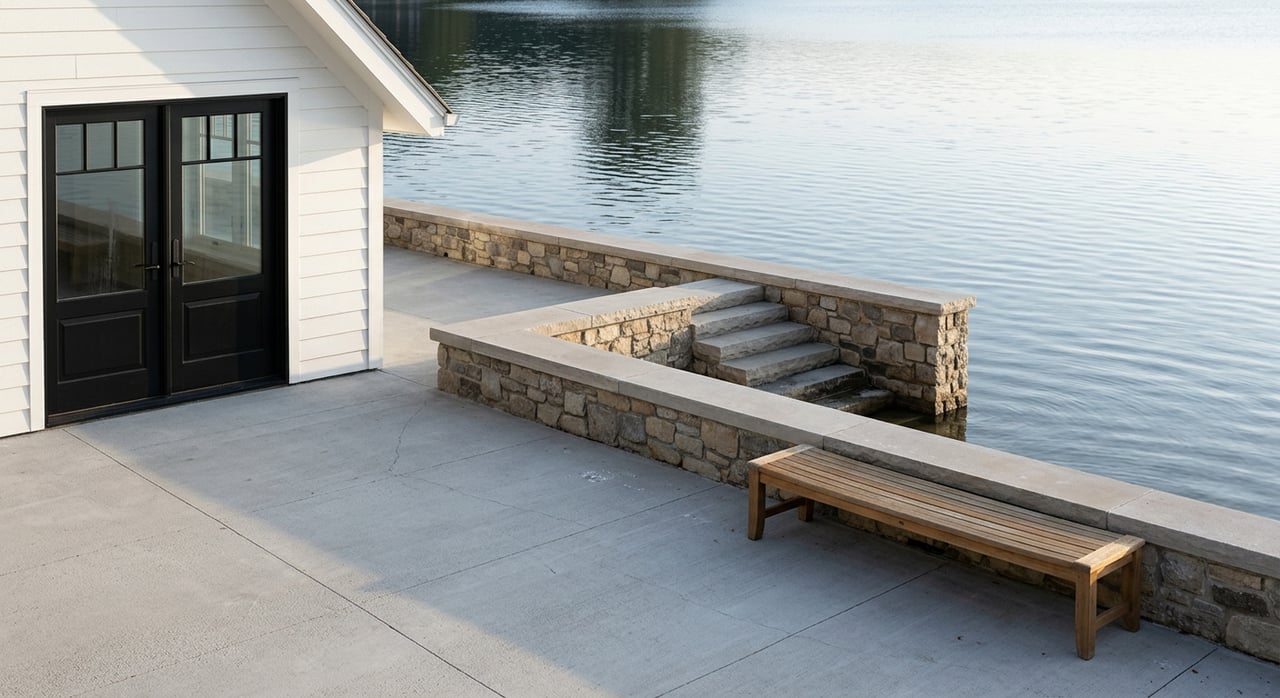
Bloomfield Township Lakefront Homes: A Buyer’s Guide
May 28, 2026
May 28, 2026
If you are dreaming about lakefront living in Bloomfield Township, the details matter more than you might think. Two homes can both sit near the water and offer very different ownership experiences, costs, and day-to-day rules. This guide will help you understand how lakefront living works in Bloomfield Township, what to look for before you buy, and which questions can protect your investment. Let’s dive in.
Bloomfield Township is a private-lake market. According to the township master plan, there are 23 lakes entirely or partially within township boundaries, and all township lakes are private with no public access for boating or swimming.
That one fact shapes almost everything about buying here. It affects access, resale value, lake use, governance, and the type of lifestyle you can expect when you move to the water.
For many buyers, that exclusivity is part of the appeal. At the same time, private lakes often come with added layers of oversight, shared responsibilities, and property-specific rules that deserve careful review before you make an offer.
Not every home near the water gives you the same rights or experience. In Bloomfield Township, it is important to understand whether a property is truly riparian, has some form of lake access, or is simply located near a lake.
The township defines a riparian owner as someone whose parcel borders a natural body of water, and it notes that riparian rights run with the land. In plain terms, if you are buying a true lakefront parcel, the rights connected to that shoreline are a major part of the value.
That distinction matters because marketing language can sound similar even when ownership rights are not. A home with water views or neighborhood access may offer a very different lifestyle than a parcel with direct frontage.
Bloomfield Township has several established lake markets that often stand out because of their size, shoreline, and active governance. Based on township information, buyers commonly focus on these lakes:
These are not ranked by the township as the “best” lakes. Still, they are useful reference points because they represent some of the larger or more established lake environments in the township.
Waterfront homes often sell at a premium compared with similar inland homes, but that premium is not fixed. In Bloomfield Township, price and resale appeal are likely shaped by a mix of shoreline scarcity, lake size, depth, water quality, governance, and recurring ownership costs.
Scarcity is a major driver. On some lakes, direct frontage is limited, which can make those properties especially sought after when they come to market.
But premium pricing does not tell the whole story. A home on the water may also carry special assessments, shoreline maintenance needs, flood-related insurance questions, and additional permitting considerations that change the true cost of ownership.
One of the biggest differences between buying inland and buying on a private lake is governance. Bloomfield Township notes that many lakes have organized lake boards or associations that actively address issues connected to property values.
Several township lake pages show current budgets, assessment rolls, or special assessment districts. These may support aquatic weed control, nuisance control, water-quality work, and related lake-management efforts.
For you as a buyer, that means a lakefront home may come with shared systems that help preserve the lake environment, but also with recurring costs. Those costs should be part of your monthly and annual budgeting from the start.
A common mistake is assuming township zoning tells you everything you need to know. In Bloomfield Township, the township advises homeowners to review subdivision deeds, conditions, and restrictions because private deed restrictions may be more restrictive than township zoning or state building codes.
In some cases, association approval may be required before a permit application is even submitted. That can affect plans for additions, shoreline work, docks, landscaping, or other exterior changes.
This is one reason lakefront due diligence should happen early. If you are buying with future improvements in mind, you will want to confirm what is allowed before closing, not after.
Not all private lakes in Bloomfield Township operate the same way. The township ordinance page shows enforceable watercraft controls on several lakes, including Wing Lake, Gilbert Lake, Forest Lake, Lower Long Lake, Island Lake, Meadow Lake, Orange Lake, Sodon Lake, Wabeek Lake, and Chalmers Lake.
The township notes slow no-wake operation on these lakes and states that it has pursued no-motorboat ordinances on larger lakes. For buyers, this is a major lifestyle factor.
If your idea of lake living includes quiet paddling, fishing, and calm shoreline conditions, one lake may fit better than another. If you expect a different style of boating use, you need to verify the current rules for that specific lake before moving forward.
The shoreline itself can strongly affect both enjoyment and resale. Bloomfield Township’s master plan notes that protecting lake water quality is tied to protecting property values, and it also points out that many waterfront homes historically developed on small lots and often on difficult soils or slopes.
That means buyers should look closely at lot shape, elevation, drainage, erosion, and the condition of any seawall or shoreline treatment. A beautiful water view can come with practical maintenance needs that are not obvious during a short showing.
Michigan EGLE also states that permits are required for many shoreline protection projects on inland lakes and streams, including new vertical walls, seawall replacements, riprap, and many dredging or fill activities. If there is existing shoreline work on a property, it is wise to confirm whether permits are current and whether future repairs would need additional review.
Not every shoreline is protected in the same way. Michigan EGLE says natural shorelines and bioengineering approaches are generally preferred because they help protect habitat and water quality.
EGLE also notes that vertical walls are generally not recommended because they can reduce habitat and worsen erosion. In some cases, maintenance of a previously permitted seawall may be exempt, but only if it is truly in-kind and does not change the design.
For a buyer, this is less about technical jargon and more about risk. You want to understand whether the shoreline is stable, how it has been maintained, and what your options may be if repairs are needed later.
In Michigan, winter conditions are part of lakefront ownership. Michigan State University Extension notes that ice push and spring ice-out can create ice ridges and shoreline recession.
That means the shoreline you see in summer is only part of the story. Seasonal conditions can affect landscaping, erosion, and long-term maintenance planning.
MSU Extension recommends keeping native shoreline vegetation in place when possible and checking bioengineered shoreline treatments before ice-in and after ice-out. If you are comparing properties, ask how the shoreline performs through winter, not just how it looks in peak season.
Even on inland lakes, flood risk can affect financing. Bloomfield Township participates in the National Flood Insurance Program, so buyers should check FEMA mapping and ask whether a home is in a Special Flood Hazard Area before closing.
If a property is in a high-risk flood area and you are using a government-backed mortgage, flood insurance may be required. Even when it is not required, floodplain status can still affect your costs and comfort level.
This is one of those issues that can change your monthly payment more than expected. It is best reviewed during the home search, not at the end of the transaction.
If you are considering lakefront living in Bloomfield Township, these are the questions worth asking early:
These questions can help you compare properties more clearly and avoid surprises after you close.
Lakefront homes are never just about square footage or finishes. In Bloomfield Township, the value of a waterfront property is closely tied to the lake itself, the lot, the rules, and the long-term carrying costs.
That is why local, property-specific guidance matters. A strong buying strategy looks beyond the listing photos and helps you understand how a home will actually live, what obligations come with it, and how it may perform over time.
If you are exploring lakefront homes in Bloomfield Township or weighing whether a current waterfront property is the right fit for your next move, Madelon P. Ward can help you evaluate the details with a clear, practical, neighborhood-informed approach.
We pride ourselves in providing personalized solutions that bring our clients closer to their dream properties and enhance their long-term wealth. Contact us today to find out how we can be of assistance to you!