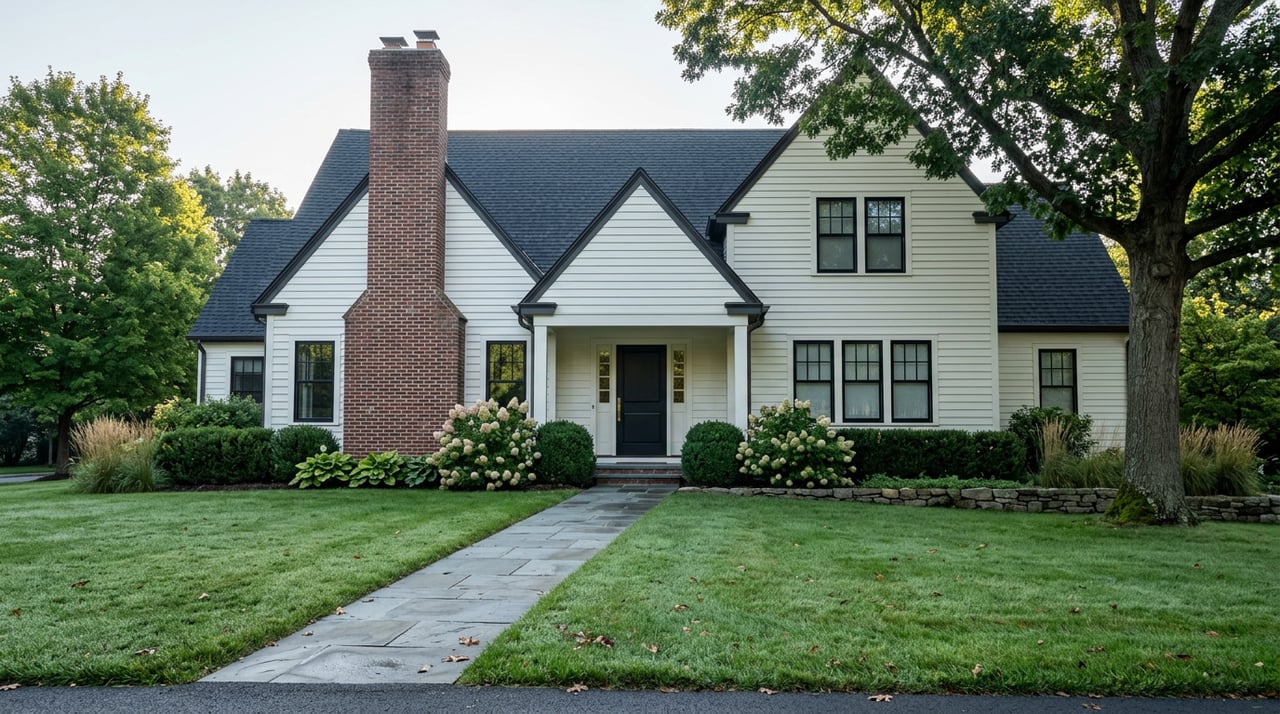
Bloomfield Hills Septic Inspection Rules for Home Sales
September 3, 2026
September 3, 2026
Picture a two-acre lot in Bloomfield Hills, the kind of property that shows up in listings with mature oaks, a long gravel drive, and enough setback that you can't see the neighbors. The house needs work. The land does the selling. Somewhere under that lawn sits a septic tank that may not have been opened in fifteen years, and here is the part most buyers don't expect: nobody has to check it before the sale closes.
The City of Bloomfield Hills says this plainly on its own website. A home inspection is not required to sell a house here, and if a buyer wants one, they have to arrange it themselves through a third party. Oakland County has never adopted the kind of ordinance that would change that. In a city known for manicured setbacks and six-figure lot premiums, it's easy to assume the oversight runs as deep as the landscaping. It doesn't. It stops at the property line.
This isn't a loophole for older homes nobody cares about anymore. The city's own website maintains a resident page dedicated to on-site septic systems, walking homeowners through failure symptoms like pooling water, backed-up drains, and strips of unnaturally green grass over the drain field, and pointing them to the Oakland County Health Department for a list of licensed inspectors. A city doesn't publish a guide like that unless a meaningful share of its housing stock depends on one.
The city takes its own municipal sewer lines seriously. Its environmental services page describes state and federal mandates that require Bloomfield Hills to inspect and rehabilitate the sanitary sewer system it owns, work the city has contracted out to engineering and utility crews who show up street by street and easement by easement. That's real oversight, and it's thorough. It just only applies to homes already connected to the municipal system. If a lot was never tied into that network, the city's diligence never reaches it.
Michigan does require something here, just not an inspection. The Seller Disclosure Act, MCL 565.957, obligates every seller of a one-to-four unit residential property to fill out a form describing the well and septic system's condition "if known." That phrase carries the whole transaction. Sellers answer from memory and paperwork they happen to have. Nobody requires them to hire an inspector first.
That distinction has already been tested in Michigan courts. In Pilcher v. Benoit, a buyer didn't discover a hazardous septic tank cover until after closing, when they fell over it while working in the backyard. The Michigan Court of Appeals didn't rule that the seller had to have known. It ruled that a jury needed to decide whether the seller actually did, based on testimony from a former tenant who said the condition had been known for some time. The case turned entirely on memory and disclosure, because there was no inspection report to settle the question either way.
A disclosure statement is a snapshot of what someone remembers. It isn't a test of what's actually in the ground.
The practical difference between a county with a time-of-sale ordinance and one without shows up clearly when you lay the two side by side.
| County or township with a time-of-sale ordinance | Oakland County (Bloomfield Hills) | |
|---|---|---|
| Who orders the septic check | The local health department, as a condition of closing | Nobody, unless the buyer requests one |
| When it happens | Before the transfer can be recorded | Whenever the buyer chooses, or not at all |
| What forces a repair | A failed inspection report | Only if a problem is visible or a buyer pays for testing |
As of a March 2026 count from the Huron River Watershed Council, eleven Michigan counties and seven townships or villages had adopted some version of this ordinance. Oakland was not one of them. That means the entire burden of finding out whether a system works shifts from the local health department to whoever is buying the house, and only if they think to ask.
There is movement at the state level. Senate Bill 771, introduced by Sen. Sam Singh in January 2026, would give Michigan its first statewide septic code, something no other state has gone this long without. As of its most recent recorded action, the Senate Natural Resources and Agriculture Committee voted along party lines in June 2026 to send the bill to the full Senate floor, according to Michigan Advance. It has not yet passed the Senate or the House, and it would still need a floor vote in both chambers plus the governor's signature to become law.
Even in the best case for supporters, the bill wouldn't help anyone closing on a Bloomfield Hills property this year or next. If it passes, Michigan's environmental agency gets three years just to write the actual statewide code. Evaluations would then begin with the highest-risk systems, those more than twenty years old and within 500 feet of surface water, before rolling into a routine ten-year inspection cycle for everyone else. In March 2026, the Huron River Watershed Council pushed back on that timeline as too slow, arguing some homes could go decades longer without ever being checked. Whatever the final version looks like, it changes nothing for a purchase agreement signed this fall.
None of this is a reason to walk away from a Bloomfield Hills estate that happens to be on septic. It's a reason to build the inspection into your own process instead of assuming someone else already did.
Sellers benefit from the same logic in reverse. Ordering a pre-listing septic inspection converts "as far as I know" into a paper record, which is precisely the kind of documentation that would have changed the outcome in Pilcher. It also gives a seller room to negotiate a fair price adjustment before a buyer's inspector finds the problem first.
Does Bloomfield Hills require any inspection before a home sale closes? No. The city states directly that no inspection is required to sell a home, and Oakland County has not adopted a time-of-sale septic ordinance the way some Michigan counties have.
If a septic problem shows up after I close, do I have any recourse? It depends entirely on what the seller actually knew and disclosed. Michigan's Seller Disclosure Act protects sellers who answer honestly based on their own knowledge. It does not protect a seller who knew about a defect and left it off the form, which is the exact question that went to a jury in Pilcher v. Benoit.
Will the new state septic bill affect my purchase this year? Not directly. Senate Bill 771 has advanced out of committee but has not passed the full legislature, and even if it becomes law, the statewide code and inspection schedule would take years to phase in.
Buying an estate on well and septic in Bloomfield Hills is still one of the strongest long-term plays in Oakland County, but it rewards buyers who treat the absence of a rule as a signal to do more, not less. The Madelon Collective works these transactions regularly and knows which inspections actually matter on a property like this. If you're ready to look at what's available, start your home search with a team that will tell you what the city won't check for you.




We pride ourselves in providing personalized solutions that bring our clients closer to their dream properties and enhance their long-term wealth. Contact us today to find out how we can be of assistance to you!