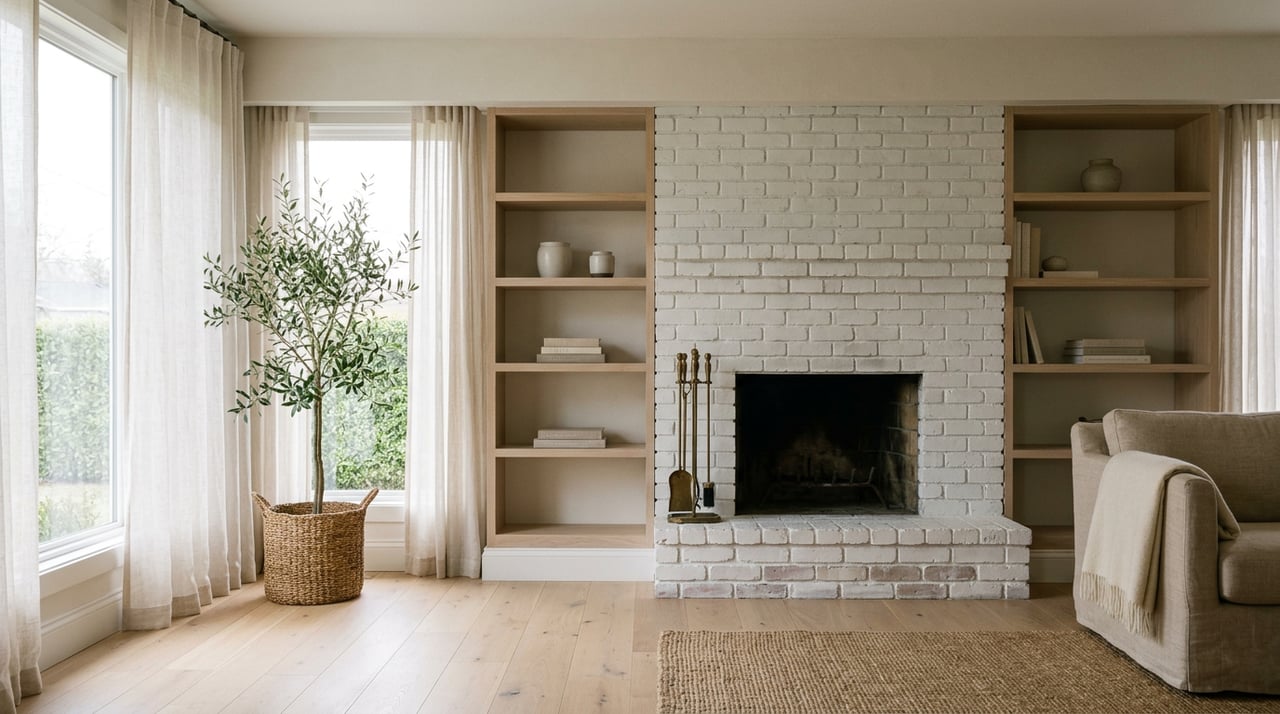
Downtown Birmingham's Condo Prices Jumped 109% Last Quarter. Six Sales Made That Happen.
September 24, 2026
September 24, 2026
If you have been watching Downtown Birmingham condo listings and pricing data this year, you have probably seen a number that stopped you: median sale price up 109.5 percent year over year, for the three months ending in March 2026. That is the kind of headline that makes a buyer panic and a seller start dreaming.
Here is the number that headline leaves out. Six homes sold in that window, down from eight the year before. A market that small does not produce a price trend. It produces a coin flip that happened to land on the high side, twice in a row.
Compare that to the rest of Birmingham. Across the full city, 111 homes sold in May 2026, up from 95 a year earlier, and the typical home sat on the market for 20 days, up from 13. That is a real, readable signal: more supply moving, slightly slower than the frenzy of the prior year, still fast by most standards. The median sale price across the city came in at $818,000 for the three months ending in May, up 12.8 percent year over year. That number is built on enough transactions to mean something.
The downtown condo segment is a different animal. With only six closings in the comparison window, average days on market swung from 20 to 116. That is not a market cooling. That is one or two slow-to-sell, high-priced units dragging the average, in a pool too small to absorb them. A single $1.5 million penthouse closing next to a $450,000 unit will produce a median that looks like appreciation and a days-on-market figure that looks like a slowdown, in the same three-month window, from the same six transactions.
This is worth sitting with, because it explains something else that trips up buyers comparing Birmingham to other Oakland County suburbs: the published median price depends heavily on which platform you check and which slice of the market it happens to be sampling that month. One national portal has listed Birmingham's typical home value in the $600,000s. Another page from the same company puts a nearby ZIP code's average closer to $750,000. A third site reported a March 2026 median sale price near $1.19 million, while a fourth showed listing medians near $1.29 million by June. None of these numbers is wrong exactly. They are measuring different things, over different windows, with different property mixes. In a market as small and stratified as Birmingham's downtown core, that variance gets amplified.
Part of why the downtown condo sample stays so thin is structural, not cyclical. Birmingham's resale luxury condo market runs almost entirely through three established buildings: The Willits, a Beaux-Arts building next to Shain Park with a doorman and concierge service, The Balmoral, a newer contemporary tower with private roof terraces and the city's largest condo footprints, and The 555, the more accessible entry point for buyers who want the downtown address without the premium of the other two. Between them, at any given time, the number of listed units available for resale is typically in the single digits.
That scarcity is normally a seller's advantage. It also means the segment cannot generate the transaction volume needed to produce a stable, trend-worthy median. A buyer comparing this month's downtown condo numbers to last month's is not watching a market evolve. They are watching a small sample rearrange itself.
Here is the part that actually matters for anyone deciding whether to buy downtown right now: the buyer pool for those three legacy buildings is not shrinking because interest in downtown Birmingham is fading. It may be shrinking because a serious new alternative has shown up, one that asks for a monthly check instead of a down payment.
Birmingham Pointe opened in the Triangle District in April 2025, a six-story, 152-unit building from Soave Real Estate Group, The Forbes Company and Hunter Pasteur on the site of a former Citizens Bank building, with a rooftop pool deck, a fitness center and concierge service built in. That is the same amenity package, in the same walkable core, that used to be the exclusive province of the three condo buildings.
A few blocks away, Boji Group's $80 million mixed-use project at 370 Brown Street pairs JPMorgan Chase anchoring more than 42,000 square feet of office space on the lower floors with 22 luxury residential units above, designed by Saroki Architecture and built by Sachse Construction. Crain's Detroit Business reported in August 2026 that the building is asking close to $7 per square foot in rent, a figure the outlet describes as testing the top of Birmingham's entire apartment market.
And in the Rail District, The Villa at The District has introduced Birmingham's first single-level luxury condo community, also designed by Saroki Architecture, with pricing starting at $1.2 million. That one is for sale rather than for rent, but it pulls from the same pool of buyers who might otherwise have looked at a Balmoral penthouse.
None of this means downtown Birmingham condos are a bad buy. It means the pool of people shopping for that lifestyle now has more doors to choose from, including ones that require no capital commitment at all. A buyer weighing a $1.2 million loft against a $12,000-a-month penthouse lease is making a very different calculation than a buyer twenty years ago, when the legacy buildings were the only game in town.
If a headline number tells you Downtown Birmingham condo prices jumped over 100 percent, do not read that as a market getting away from you. Ask how many units actually closed. If the answer is in the single digits, that number is describing which specific units sold, not where the segment is heading.
The more useful comparison is price per square foot within a single building, against the two or three most recent closings in that same building, not the citywide or ZIP-level median. A Willits unit and a Balmoral penthouse are not interchangeable data points, even though a portal's algorithm will average them together without blinking.
And if you are choosing between buying a resale condo downtown and renting in one of the new buildings, that decision has gotten genuinely harder to model on price alone. The rental product now offers concierge service, a rooftop pool and a walkable address with none of the resale risk. That competition is likely part of why the legacy condo pool keeps producing so few transactions to measure. It is not that nobody wants to live downtown. It is that fewer of them are choosing to buy their way in when a well-appointed lease sits right down the street.
For a buyer with real capital and a long horizon, that thinness can work in your favor. A market moving six units a quarter has very little pricing pressure behind it beyond what the seller and buyer negotiate directly. Sellers in that position do not have a deep bench of competing buyers to lean on. Know your comps building by building, and you can walk into a negotiation with more leverage than the headline percentage suggests.
If you are trying to make sense of what a specific building, or a specific block, is actually worth right now, that is exactly the kind of question worth a real conversation rather than a portal average. The Madelon Collective works Birmingham's downtown market building by building, and we are glad to walk through what your comps actually look like before you make a move. Start Your Home Search when you are ready to see it firsthand.
We pride ourselves in providing personalized solutions that bring our clients closer to their dream properties and enhance their long-term wealth. Contact us today to find out how we can be of assistance to you!